Showing posts with label Weapons. Show all posts

Wednesday, October 7, 2020

First in Peace: USS George Washington (SSBN 598) and the Polaris Missile

USS George Washington (SSBN 598) crest, with the ship's motto "First in Peace" reinforced by the Polaris missile for nuclear deterrence. (Naval History and Heritage Command)

Thomas Grubbs
Guest Contributor

As the nation’s first president, George Washington has long been remembered through the practice of naming various places, from high schools to the forty second state, after him. This fact, combined with President Washington’s early and vocal support for the establishment and maintenance of the United States Navy, led to no fewer than sixteen American ships being named after him.  Four, including a pair of battleships, have been named for the state named for him. Of all of these ships, perhaps the most powerful, and least well known, is the ballistic missile submarine with the pennant number SSBN 598. 
USS George Washington on the surface while on patrol (Wikimedia Commons)

The first use of sea-based missiles came immediately after the end of the Second World War, utilizing captured German technology. Such weapons were not confined to the surface fleet. Beginning in the early 1950s, advances in missile technology gave submarines the capability to launch surface to surface missiles.  At first simply armed with conventional high explosive warheads, these missiles were soon paired with a far more terrifying weapon: the atomic bomb.  
A Regulus missile fired from USS Tunny (SSG 282) (Wikimedia Commons)

Given the submarine’s inherent ability to remain both mobile and hidden, both the United States and the  Soviet Union began to base a proportion of their nuclear arsenals aboard submarines.  It took less than fifteen years for science and technology to realize their full potential, and by the 1950s, missile boat technology had reached a point where a single nuclear armed missile submarine could launch up to five nuclear warheads from more than five hundred miles away. Beginning in 1957, the United States Navy conducted nuclear deterrence patrols using a pair of World War II-era diesel submarines modified to carry a pair of Regulus nuclear-capable cruise missiles.  They were soon supplemented by a pair of purpose-built Greyback-class vessels and the nuclear-powered USS Halibut (SSGN 587). These five boats provided valuable real-world experience in operating a seaborne nuclear deterrent.  However, the effectiveness of the subsonic Regulus missile, with its limited range, a host of guidance limitations, and vulnerabilities to enemy defenses and countermeasures (both the missile in flight and the submarine having to surface to fire), was soon outpaced by technology.  To overcome these drawbacks, the Navy turned to a new and more advanced weapon, the ballistic missile.    
Polaris missile launch in July 1960 (Naval History and Heritage Command)

The first workable submarine-launched ballistic missile used by the United States Navy was introduced in 1960. Named Polaris, after the North Star, the missile grew from experiments by noted physicist Edward Teller that allowed for miniature hydrogen bombs to be fitted on missiles for anti-submarine warfare as part of Project Nobska in 1956. Drawing on experimental experience with the Army’s liquid-fueled Jupiter missiles, the two-stage solid fueled Polaris made its operational debut for the United States Navy in February 1960 after just four years of testing and development.  Found in thirty-one of the forty-one ballistic missile submarines (SSBNs) that were in commission for the United States Navy between 1960 and 1990, it proved both a long lasting and valuable component of the United States nuclear triad during the Cold War. Larger (32ft 4in) and heavier (35,700lb) than the previous cruise missiles, Polaris could deliver three W58 thermonuclear warheads with a total yield of 600kt out to a distance of 2,500 nautical miles. Surprisingly accurate, each 200kt W58 warhead could land within 3,000 feet of its intended target, impressive for 1960s technology. Launched from a mobile and submerged platform and possessing a top speed of 8,000 miles an hour, Polaris was all but utterly immune to interception prior to launch and impossible to hit afterwards with the technology available at the time. The more powerful and longer ranged Trident and Trident II missiles eventually replaced the Polaris missile, and are currently carried by the Ohio-class SSBNs.
A view of the missile compartment "Sherwood Forest" aboard USS George Washington (Naval History and Heritage Command) 

Polaris first went to sea aboard the world’s first purpose-built SSBN, the USS George Washington, which was built at the Electric Boat Corporation of Groton, Connecticut. On the morning of November 1, 1958, workers laid down the keel of a new attack submarine to be named USS Scorpion (SSN 589). Modified while under construction by the addition of a 130-foot-long missile compartment and renamed USS George Washington (SSBN 598), the former Scorpion, now the world’s first ballistic missile submarine, slid into the water on June 9, 1959. It formally joined the fleet on December 30 of that year. A true underwater leviathan, Washington, affectionately nicknamed “Georgefish,” displaced 6,800 tons, measured 381 feet long, with a beam of 33 feet, and required a crew of 112 officers and men. Armed with sixteen Polaris missiles and six  torpedo tubes, George Washington would be the first of a planned five Washington-class ballistic missile submarines.  
Loading a Polaris missile aboard George Washington for testing in July 1960. Pictured is the outer fiberglass "sleeve" around the missile. (Naval History and Heritage Command)

After sea trials and under the command of Commander James Osborn, the boat set course for Cape Canaveral, Florida in June 1960, where the crew took on a pair of Polaris missiles for testing purposes. On July 20, 1960, USS George Washington became the first submarine to launch a ballistic missile while submerged on the Atlantic Test Range. At 12:39 PM, Osborn sent the message “POLARIS - FROM OUT OF THE DEEP TO TARGET. PERFECT” to President Eisenhower. Less than two hours later, the missiles hit their target some 1,300 miles away. The successful test, carried out under the personal supervision of Polaris project director Rear Admiral William Raborn, marked a new, and more terrifying, world order.
(Wikimedia Commons)
Rear Admiral Raborn (center) aboard the submarine after the successful Polaris test launch in July 1960 (Naval History and Heritage Command)

After this brief flirtation with fame, USS George Washington settled into the repetitive duty of deterrence patrols near the coastline of the Soviet Union.  In 1970, the submarine reported for a refueling at Charleston, South Carolina in 1970 after having traveled some 100,000 nautical miles the previous decade. Next, George Washington reported to Pearl Harbor, Hawaii for service with the Pacific Fleet. The submarine concluded its final deterrence patrol in 1982 prior to disarmament as a SSBN the next year in compliance with the terms of the SALT I Treaty.  It briefly served as an attack submarine after the removal of its Polaris missiles. 
Sail from SSBN 598 at U.S. Navy Submarine Force Museum (Wikimedia Commons)
USS George Washington was decommissioned on January 24, 1985, and later scrapped at Puget Sound Naval Yard.  The submarine’s sail, or conning tower, is on display in Groton, Connecticut, at the Submarine Force Museum, where it can be seen today.  Preserving peace, yet constantly prepared for war, USS George Washington carried some of the deadliest weapons ever devised by man. Similarly, the current submarine fleet, as well as future Columbia-class SSBNs being built will be charged with maintaining the sea-based nuclear deterrent for the United States of America and with it, the balance of terror that has kept the peace for the last seventy-five years.  

Tuesday, June 23, 2020

Necessity was the Mother of Lethality (Part 3): Handmade Viet Cong Carbine


This slide and slam-action carbine, captured from the Viet Cong during the Vietnam War, is from the collections of the Naval History and Heritage Command (NHHC) and is featured in the Hampton Roads Naval Museum's exhibit, The 10,000 Day War at Sea, the U.S. Navy in Vietnam, 1950-1975 .  (M.C. Farrington)
By M.C. Farrington
HRNM Historian
&  Zachary Smyers
HRNM Educator

For this installment of our series on some of the rather unique Viet Cong weapons featured in our current exhibit, The Ten Thousand-Day War at Sea, we were not precisely sure what to call this weapon, but we decided that the safest bet is to stick with "Viet Cong Carbine." 
Viet Cong Carbine, left side. (M.C. Farrington)
Although one might be tempted to call it a rifle because of its appearance, most small arms of its type lacked rifled barrels.  It is of a very simple design, and it definitely looks like it uses slam fire action (based on the spring-loaded bolt configuration), during which a round is fired as soon as it is inserted into the chamber.  
Three-quarter view, close up of right-hand side showing exposed spring-loaded bolt. (M.C. Farrington)
Before North Vietnamese weapons shipments down the Ho Chi Minh Trail overwhelmed American and South Vietnamese interdiction efforts during the latter part of the 1960s, very few factory-made small arms were in the hands of front-line National Liberation Front fighters, known to their enemies as the Viet Cong. 
The trigger and guard looks as though it might have been salvaged from another weapon.  Note the NHHC accession number affixed to the inside of the guard.  (M.C. Farrington)
Left literally to their own devices during the early years of their struggle with American and Republic of Vietnam forces, Communist cadres in South Vietnam fashioned firearms from old pipes, automotive and even bicycle parts in underground workshops, of which many were literally underground.  Some were patterned after weapons captured from the Japanese when they occupied French Indochina during World War II.  Many were imitations of those captured from the French during their unsuccessful attempt to reestablish their colonies in Indochina after the war.  They also replicated German weapons captured by the Soviets during the war that were given to the Viet Cong's predecessors, the Viet Minh, to aid in their fight against the French.  An assortment of other Soviet, Chinese, and even American designs rounded out the Viet Cong insurgents' small arms stocks by the mid-1960s, but it would be unfair to characterize their efforts as merely imitative.  The guerrilla gunsmiths operating in the tunnels and swamps of South Vietnam were more than capable of creating their own designs, and the weapon featured here just might be one of them. 

The trigger and guard, as seen from below.  (M.C. Farrington)
Although it seems that a pin or bolt once held it there, by the time of the carbine's capture the upper receiver component, if you will, was attached to the stock assembly with a wire, not winning it any longevity contests.
A piece of wire holds the rear of the receiver to the carbine's stock assembly.  (M.C. Farrington)
The magazine well is not too large, and the actual cartridge that this weapon may have fired is vague.  It could have been anything from one of the small pistol calibers like the Soviet Tokarev, which is 7.62x25mm, or possibly 7.62x39 (which is what the AK-47 fired).  As with most firearms of this type, it is safe to say the weapon was designed around whatever ammunition its makers had the most of.  The capacity of the magazine is also hard to say, though it could be compatible with the 10-round 7.62x54mm Soviet World War II-era SVT-40 magazine.
Ahead of the magazine well as seen from under the carbine, the accession number appears to have originally been added shortly after its incorporation into the NHHC small arms collection. (M.C. Farrington)
All that is clear about this weapon is that it was taken off the battlefield just as the Vietnam War was really heating up, in part due to the dramatic surge and variety of weapons, the majority of them from Chinese factories, made available to the Viet Cong by the relentless logistical effort mounted by the North Vietnamese through the Ho Chi Minh Trail.  After the Viet Cong was largely decimated during the 1968 Tet Offensive, soldiers of the People's Army of Vietnam filtered into the south via the trail to replace them, many of them carrying the North Vietnamese K-50M and the Chinese Type 56, examples of which are also featured in the exhibit.  

Tuesday, June 16, 2020

Necessity was the Mother of Lethality (Part 2): Scrap Wood & Metal Becomes Pistol

Cut off from a reliable source of manufactured goods early in the war thanks in part to U.S. and Republic of Vietnam Navy vigilance, National Liberation Front (also known as Viet Cong) fighters operating in South Vietnam carried primitive firearms such as this single-shot smoothbore pistol, which used a nail as a safety.  It is one of the more unusual weapons featured in the Hampton Roads Naval Museum's exhibit, The 10,000 Day War at Sea, the U.S. Navy in Vietnam, 1950-1975 .  (Naval History and Heritage Command (NHHC) collection/ Photograph by M.C. Farrington)
By Thomas Grubbs
Contributing Writer

The 9mm round is the AK47 of the ammunition world. Widely available, it is fired from literally hundreds of firearms, both pistols and submachine guns. It can be found in every armory and most every gun store or arms bazaar on earth. Their ubiquity has made it the go-to caliber for homemade weaponry. The Viet Cong, denied access to traditional sources of weaponry such as foreign imports or in territory factories, naturally turned to manufacturing their own firearms, such as the pistol seen above.

Like the RC Cola grenade, this homemade handgun is a product of necessity. Small arms, like all other types of military materiel, would have to be transported over the difficult land route known as the Ho Chi Minh Trail or by sampan along the coast. It would also have to compete for scarce space against other equally important war materiel such as medical supplies or spare parts. Both routes were exposed to American air and sea power, particularly units supporting Operation Market Time, which took a steady toll on supplies traveling down them. Therefore, manufacturing weapons on site in South Vietnam was a much safer and more convenient alternative.

Unfortunately, there were no arms factories supplying Viet Cong forces in South Vietnam. Making weaponry in hidden workshops allowed the Viet Cong to have a source of supply of small arms to be close to the, for lack of a better term, front line yet protected from attack. The pistol’s crude construction from commonly available materials belies its effectiveness: at close range it would be just as effective in killing as a pistol constructed in a factory. In this case, necessity is the mother of invention.

This slightly different view shows a serial number painted onto the grip. (NHHC collection/ Photograph by M.C. Farrington)

Editor's Note: Thomas Grubbs earned a master's degree in military history from Southern New Hampshire University and is currently a park ranger interpreter at Vicksburg National Military Park, Mississippi. His research interest is in the history of the dreadnought battleship. 

This and every HRNM blog post by a contributing writer reflects the opinions of the writer and should not be construed as representing the official policies or opinions of the Hampton Roads Naval Museum, the Naval History and Heritage Command, Department of the Navy, or the United States Government.

Friday, May 29, 2020

Necessity was the Mother of Lethality (Part 1): RC Can Becomes VC Grenade

From its origins in Columbus, Georgia, in 1934, RC Cola became one of the most popular drinks in America during the Second World War, although most GIs couldn't necessarily lay their hands on one as they fought their way across the globe.  By the time of the Vietnam War a generation later, military logistics has improved to such a point that canned soft drinks and beer provided a welcome reminder of home to those deployed in-country.  All the cans the service members discarded after their use, however, presented an opportunity to those seeking to send the GIs home, one way or another.  Although RC was the first company to distribute sodas in aluminum cans, this soldered-seam steel soda can could be pried open, packed with powder and shrapnel, and re-soldered shut, while the tab top made a convenient place to insert a rudimentary fuse system.  This example from the collections of the Naval History and Heritage Command (NHHC) is featured in the Hampton Roads Naval Museum's exhibit, The 10,000 Day War at Sea, the U.S. Navy in Vietnam, 1950-1975 .  (M.C. Farrington)
By Thomas Grubbs
Contributing Writer


Modern war requires immense amounts of resources to wage, from small arms ammunition to capital warships. Like in so many other areas, factories and assembly lines meet these requirements. Most nations possess the capability to manufacture their own consumables, ranging from boots and uniforms to small arms ammunition and field rations. For more complex items such as vehicles, aircraft or small arms, nations either manufacture their own or purchase them for hard currency or other valuables such as oil or the cancellation of debts from foreign nations that possess that capability. A terrorist or insurgent group such as the Viet Cong, however, lacks this advantage. Few nations wish to have headlines reading that they are providing war material to groups operating outside of commonly accepted guidelines on armed conflict splashed all over the news. Condemnation and sanctions are sure to follow. Therefore, in order to meet their needs for war material, such a group must turn to other methods of acquisition. This acquisition in turn takes one of three forms: repurposing of other materials, homemade weaponry or the copying of existing weaponry.
The other side of the RC hand grenade showing the safety pin and lever hanging over the solder seam. (NHHC collection/ M.C. Farrington)

Example 1. The Royal Crown Cola grenade:

One of the hallmarks of contemporary American culture is its intensive focus on materialism and the production of consumer goods from high-end electronics to soda pop. The American service member, no matter where in the world he or she may be, demands access to at least some of the comforts of home. A second hallmark of this culture is the enormous amount of trash that is produced in the process. It is doubtful that a guard would be posted on the base trash heap, thus presenting an opportunity to a canny foe to acquire some of the raw materials of weapons manufacture. Inevitably, the intersection of human ingenuity, the exigencies of war, the desire for comfort goods and easy access to massive amounts of trash would conspire to create one of the infantry’s favorite weapons: the hand grenade.
Viet Cong improvised hand grenade, reverse side. (NHHC Collection/ M.C. Farrington)
Hand grenades are popular amongst the infantry for three reasons: they are easy to use, easy to carry and they are effective weapons in a wide array of tactical situations. Most grenades, for obvious reasons, are mass-produced in factories to standardized designs and capabilities. The Viet Cong, being an insurgent group operating deep in hostile territory, was cut off from the typical supply lines enjoyed by regular soldiers. Making use of what they had and what they could find, Viet Cong weaponsmiths manufactured hand grenades, such as the RC Cola hand grenade displayed in the HRNM's exhibit on the U.S. Navy in the Vietnam War, out of the castoffs of their American adversaries. While of dubious reliability, there can be no doubt that this weapon and others like it would be just as effective as the factory-produced models utilized by their American adversaries. 

Editor's Note: Thomas Grubbs earned a master's degree in military history from Southern New Hampshire University and is currently a park ranger interpreter at Vicksburg National Military Park. His research interest is in the history of the dreadnought battleship. 

Friday, April 24, 2020

Recoilless Weapons: From the Mountains of Korea to the Rivers of Vietnam


This 75mm shell currently on display at the Hampton Roads Naval Museum is designed to be fired from the Chinese Type 52 recoilless rifle. The perforations on the case allow the propellant gases to escape during firing, which then vent through the back of the rifle’s breech and eliminate any recoil.  This Chinese-made high-explosive 75mm round was captured in 1967 by an intelligence platoon of the Republic of Vietnam Navy (VNN) in the Rung Sat Special Zone (a partial map of which is in the background of the photograph), a vast mangrove swamp known to harbor Communist insurgents for most of the Vietnam War.  A U.S. Naval Forces Vietnam Zippo lighter, monogrammed to be presented by Admiral Elmo Zumwalt, is shown for scale. (M.C. Farrington)
By A.J. Orlikoff
Hampton Roads Naval Museum Educator

Prologue: Korea, 1952
U.S. Army Staff Sgt. Donald Kirkpatrick poses for a photo during his time in the Korean War. Serving from October 1951 to July 1953, the Mansfield, Ohio native was drafted into the Army and received additional special training in heavy weapons, including with the M20 recoilless rifle. The younger brother of a Battle of the Bulge veteran, Kirkpatrick served until being recalled to the United States and honorably discharged in July 1953. An accomplished plumber and volunteer firefighter, Kirkpatrick never forgot his experiences in the Korean War. (Mansfield [Ohio] News Journal)
Army Staff Sergeant Donald Kirkpatrick, while assigned to the 2nd Battalion, 23rd Infantry Regiment, 2nd infantry Division, was stationed at a defensive position on a mountaintop along the 38th parallel. With Korean People's Army (North Korean) soldiers holding a neighboring mountain, it was Kirkpatrick’s job as a heavy weapons observer to ascertain how best to bombard the North Korean position. Wary of the North Korean artillery which had previously bombarded their position and killed one of his friends, Kirkpatrick came up with a new plan.

American army soldiers fire a M20 recoilless rifle during the Korean War. While designed to be a light infantry anti-tank weapon, the M20 was ineffective at penetrating the thick armor of Soviet built T-34 tanks. Army units adapted and utilized the light weight of the recoilless rifle as a portable infantry support weapon. In this purpose, the M20 excelled as its light weight allowed American units to effectively suppress and destroy enemy bunkers and entrenched positions.(U.S. Army photograph)
Kirkpatrick realized that one of their heavy weapons, an M20 75-mm recoilless rifle, had allowed the North Korean artillery to zero in on their position as the powerful back blast kicked up dust plumes that could be seen from miles away. Kirkpatrick remembered, “It [the M20] was a direct-fire weapon and they [North Korean troops] could see where we were because of it [back blast]. Me and a couple of other sergeants, we came up with the idea of setting up an 82-millimeter mortar a ways back from the recoilless crew. When the North Koreans would fire on the recoilless, we’d start dropping mortars on them. The enemy couldn’t see us at all because we were down behind the rifle.” Turning a weakness of the M20 into strength, the men of the 23rd bombarded the North Korean artillery position with mortar fire, silencing the North Korean artillery, at least for another day. Kirkpatrick never forgot his experiences serving in the Korean War using the M20 recoilless rifle.
An assortment of American arms, including bazookas, captured during the Korean War on display at the Victorious Fatherland Liberation War Museum in Pyongyang, Democratic People's Republic of Korea (North Korea) in April 2010. The North Koreans' allies from the People's Republic of China studied and replicated such arms, which included American recoilless rifles, which ultimately found their way into the Democratic Republic of Vietnam (North Vietnam) and were used by their armed forces as well as Viet Cong cadres operating in the Republic of Vietnam (South Vietnam). (John Pavelka/ Flickr/ Wikimedia Commons)   
More than a decade later, American servicemen fighting another war against Communists also experienced the M20 recoilless launcher, but this time it was used by the enemy.

Vietnam: Recoilless Weapons Rebound


American and Army of the Republic of Vietnam (ARVN) forces were fighting a much more unconventional type of war in Vietnam than in Korea, countering an insurgency. The operational challenges associated with this type of warfare were numerous and the Viet Cong (VC) were not going to make it easy.  VC forces, outmatched by superior American and ARVN forces, employed ambush tactics against Army and Navy forces with whatever weapons they could get their hands on.

Although easy to use, the Chinese Type 52/56 did require training to use effectively. In this photo, Viet Cong recruits pose for a photo with a Chinese Type 52 while being trained to use the weapon. Notice that the Type 52 is angled for use as an indirect fire weapon, lobbing shells at a high trajectory (like a mortar) to hit targets hundreds of yards away. The man 2nd from the right is holding a shell for the weapon.  (Australian War Memorial)
The VC used a number of Soviet and American-designed weapons such as the RPG-7, the B-40, and the Type 51 (a copy of the American bazooka) to combat U.S. Navy and Republic of Vietnam Navy (VNN) riverine assets.  Many if not most were made in the People's Republic of China.  One of them would have been very familiar to Kirkpatrick.  The 75-mm recoilless rifle round on display in the exhibit, The 10,000 Day War at Sea, the U.S. Navy in Vietnam, 1950-1975, is made for a Chinese Type 52 Recoilless Rifle, an exact copy of the American M20 Recoilless Rifle that Kirkpatrick used in Korea.
Found among the photographs Army Staff Sgt. Ernest W. Payne of Charlotte, North Carolina, took during the Vietnam War is this captured recoilless rifle at an unidentified camp in South Vietnam.  Although it bears a passing resemblance to the American M18 57-mm recoilless rifle, which was used during the Korean War, it is most likely a Chinese Type 65 82-mm smoothbore recoilless gun copied from the Soviet B10. (Ernest W. Payne Papers,VW 22, Vietnam War Papers, Military Collection, State Archives of North Carolina, Raleigh, NC)
An unidentified U.S. Army Soldier leans on a captured enemy recoilless rifle (Most likely a Chinese Type 65) from the photo collection of Staff Sgt. Ernest W. Payne, who served at Headquarters and Headquarters Company, 2nd Battalion, 7th Calvary, 1st Air Calvary Division from 1967 to 1968. (Ernest W. Payne Papers,VW 22, Vietnam War Papers, Military Collection, State Archives of North Carolina, Raleigh, NC)
Most rocket weapons used by Viet Cong fighters were recoilless launchers.  Known as Dai-bac Khong Giật (DKZ) by Viet Cong fighters, recoilless rifles and launchers were an integral component of their war effort.  Recoilless weapons were effective and easy-to-use rocket launchers capable of accurately launching an explosive warhead anywhere, depending on the rifle and expertise of the user, from 100 to 400 meters away.  As the name suggests, recoilless launchers were ingeniously designed to minimize recoil through a forceful ejection of gas from the rear of the weapon.  This creates reverse thrust, counteracting the recoil from the launch of a projectile.  This system allows the construction of light-weight, portable launchers without bulky recoil-countering components.
German soldiers in World War II, seen here after firing the 10.5-cm Leichtgeschütz 40, were the first force to widely utilize recoilless rifles in combat. Translating to “Light Gun 40,” the 7.5-cm Leichtgeschütz 40 was first used during the German invasion of Crete, where 22,000 Fallschirmjäger paratroopers attacked British and Greek units on Crete. It was the first mass airborne invasion in history and, despite heavy losses, the German paratroopers succeeded in accomplishing their objectives. Due to the success of the 7.5-cm Leichtgeschütz during the invasion, other recoilless rifle variants were produced such as the larger 10.5-cm variant which were organized into artillery units as opposed to an infantry support role. Favored by the Fallschirmjäger paratroopers and Gebirgsjäger mountain troops for their light weight, recoilless rifles proved to be a viable and effective weapon during World War II. (Wikimedia Commons)
The first recoilless rifles were designed by German and Soviet weapon designers in the 1930s. In particular, the German Leichtgeschütz 40 proved to be particularly effective, with the 7.5 cm variant providing critical light infantry support to German paratroopers during the invasion of Crete. The German designs were loosely copied by American manufacturers and were adopted by the Army towards the end of World War II, including in the form of the M20 recoilless rifle. Firing a spin-stabilized 75-mm HEAT round, the M20 first saw widespread service during the Korean War as a light infantry anti-tank weapon. The M20 proved to be ineffective at penetrating the thick armor of Soviet built T-34 tanks but Army units adapted and utilized the light weight of the recoilless rifle as a portable infantry support weapon, using it effectively against enemy bunkers and artillery positions.

The United States quickly produced much more effective anti-tank weapons, such as the M40 recoilless rifle and the M72 LAW. Largely obsolete by the time of the Vietnam War, the M20 suited the uses of the Viet Cong well. While the M20 was ineffective at penetrating the thick armor of Soviet tanks, it was perfectly capable of taking on the unarmored fiberglass hulls of Navy river patrol boats (PBRs) on the rivers of South Vietnam. China produced unlicensed copies of the M20 in the form of the Chinese Type 52 after capturing M20s during the Korean War. Identical to the M20, Type 52 recoilless rifles were produced in their hundreds and sent down the Ho Chi Minh Trail.

The Type 52 was extensively used by People's Army of Vietnam (North Vietnamese) and Viet Cong fighters during the Vietnam War.  Its advantages were the same as the widely-used B-40 launcher; The Type 52 was light-weight, easy to transport, easy to use, versatile, and packed a powerful punch. With a range of up to 400 meters and a muzzle velocity of 300 meters per second, the Type 52 was more than capable of ambushing Navy riverine forces from the banks of rivers, canals, and waterways. Breech loaded and fired from a tripod, a trained crew of two to three guerrillas could quickly fire multiple shells at an enemy. The Type 52 could also be used in an indirect fire role, with a kilometer range when lobbing high-explosive shells at high arc of trajectory into American or ARVN bases. The Chinese Type 56, another M20 variant, improved on the original M20 design with the addition of a fin-stabilized warhead as opposed to a spin-stabilized one, adding to its armor piercing capability, accuracy, and range. The weakness of the Type 52/56 was the same that Kirkpatrick had observed; the powerful back blast of the weapon was highly visible, exposing the location of the weapon and its crew.

The original record photograph of the 75-mm recoilless rifle round. (Naval History and Heritage Command Curator Branch)
The 75-mm Type 52 shell on display stands as poignant reminder of the paradoxical nature of the Vietnam War.  An American weapon was copied and produced by a Cold War rival and shipped to a Communist guerilla force fighting an unconventional asymmetric war against American forces. VC guerillas effectively used the Type 52 and other recoilless weapons to engage American riverine forces. Although the VC were defeated time and time again on the battlefield by American and ARVN forces, their ability to efficiently resupply with cheap and reliable weapons like the Type 52/56 enabled them to continue fighting throughout the conflict.

The display area showing the Chinese-made 75-mm recoilless round currently on display in the Riverine section of the Hampton Roads Naval Museum's new exhibit, The Ten Thousand-Day War at Sea, The U.S. Navy in Vietnam, 1950-1975. (M.C. Farrington)

Friday, March 6, 2020

Essentials for the VC War at Sea

Although Air Force photojournalist Herman Kokojan wrote in his original caption that this Viet Cong soldier observing a prisoner exchange, including 27 American POWs, in Loc Ninh near the Cambodian border on February 12, 1973, was holding an AK47 assault rifle, it is much more likely that he was holding a Chinese Type 56, which were smuggled to the Viet Cong from North Vietnam in huge numbers. Kokojan was nominated for the Pulitzer Prize for the images he took that day. (Defense Visual Information Archive)
By Thomas Grubbs
Contributing Writer

The Avtomát Kaláshnikova model of 1947, or AK47 for short, is perhaps the most instantly recognizable firearm on earth. Even those lacking any knowledge of weapons recognize its silhouette from movies or television shows as the go to weapon of the program’s antagonists. Long a staple of militaries, criminal organizations and “freedom fighters” around the world, it is as close to idiot proof as engineers have been able to come.

Cheap to manufacture, easy to use, rugged and reliable, the AK47 remains common more than seventy years after its introduction into the armed forces of the former Soviet Union. Formerly a staple of the Soviet Red Army, it has since been replaced by more modern AKM and AK74s in that country’s service. Yet due to the ubiquity of the AK47 and the fact that the Soviet Union all but gave them away for decades to any group or nation claiming even tenuous association with international Communism, it remains common around the world to this day.
Type 56 assault rifle, right side, one of the many weapons and other artifacts featured in the Hampton Roads Naval Museum exhibit, The Ten Thousand-Day War at Sea, 1950-1975.  (NHHC 1966-207-D/ M.C. Farrington)
The Soviets also exported the production licenses to many of the former Warsaw Pact nations and ideological allies around the world who in turn manufactured their own copies of the weapon and exported them to other nations alongside the Soviet-made weapons. Alongside vodka and works by Dostoevsky, the AK47 is the best-known Russian export product. Of the many knockoffs and copies which exist, none is more common or important than the Type 56 of the People’s Republic of China (PRC). 


The Genesis of the Type 56

In 1949, the Chinese Communist Party, under the leadership of Chairman Mao Zedong, finally won the Chinese Civil War that had been raging since the early 1930s. With the final defeat of the Nationalists in 1947, Mao inherited both the most populous country on Earth and a ruined industrial base and economy. The international situation was not much better: the Cold War between the Capitalist West and the Communist East had begun. It could not be expected that the United States or other western nations would bankroll the rehabilitation of the new PRC, their ideological opponent. Therefore, Mao turned to Josef Stalin of the Soviet Union for assistance in rebuilding his country.
The factory marking on the rifle's left side shows that it was made at State Factory 66 in the People's Republic of China (PRC). (M.C. Farrington) 
In addition to economic aid and various subject matter experts, Stalin sent weapons to his new ally, including the AK47, to prop up the latter’s armed forces. Even with extensive Soviet assistance, China was unable to design new weapons for the People’s Liberation Army (PLA).  It instead was forced to create copies of extant Soviet weapons, including the AK47, to arm its military.
Type 56 assault rifle, left side. (M.C. Farrington)
First issued in 1956, the new assault rifle, codified as the Type 56, became the standard issue small arm of the PLA. It remained in front line usage until its replacement by the more modern bullpup QZB 95 near the end of the Twentieth Century. The Type 56 remains in service with second line and reserve forces within the PLA to this day due to the sheer number produced. It, like its AK47 progenitor, was a popular export weapon from the People’s Republic and remains in service with the militaries of nearly 50 countries around the world.
The Type 56 fire selector switch in the safe (upper) position, with the middle for automatic fire and the lower for semi-automatic. (M.C. Farrington)
Thanks to its near ubiquity in the international arms trade, many have found their way into the hands of criminals and terrorist groups via the black market where it remains common. The Type 56 has also been a weapon of choice in civilian mass shootings thanks to its high rate of fire, availability and ease of use. The international arms export controls applied to the AK47 have, for the most part, not been applied to the Type 56. It was used in the 1987 Hungerford Massacre in the United Kingdom, the Stockton Schoolyard shooting in California two years later and the 1997 North Hollywood Shootout among others. Due to controls placed by the United States Federal Government on importation of the AK47 within that nation’s borders, the Type 56 has been featured in many Hollywood films masquerading as the AK47, including being wielded by Charlie Sheen in the climax of the excellent movie Platoon. In a case of art imitating life, American soldiers did indeed face off against the Type 56 in the jungles of South Vietnam.
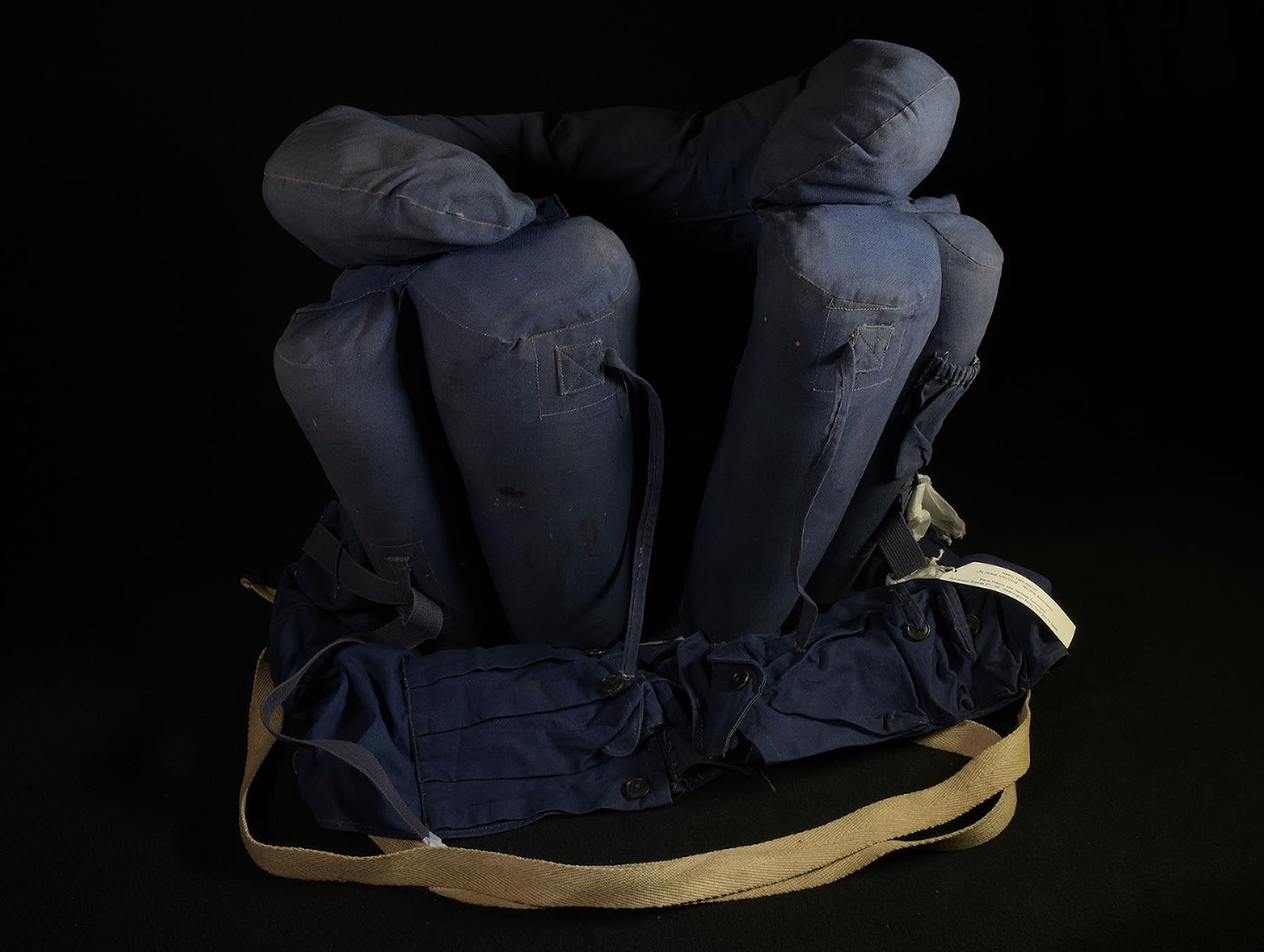
Chinese-made life vest found aboard a captured vessel. (NHHC 1968-580-W/ M.C. Farrington)
The PRC and the DRV

China began to cultivate its own set of regional allies once its domestic issues had been mostly settled by the mid-1950s to strengthen its international position. Among the most important of these allies was the new Democratic Republic of Vietnam (North Vietnam). As part of the peace deal which ended the Franco-Vietnamese War (1945-1954), the country of Vietnam was split into the Communist North and Capitalist South.  The PRC, wanting both to support an ideological ally and strike a blow to international Capitalism, became the DRV’s biggest and most important ally. 

Amongst the military aid delivered to Hanoi was the Type 56. Heavier weapons such as tanks, missiles, artillery and aircraft soon followed over their shared land border. At the time, North Vietnam’s primary foreign policy goal was to reunify the country under Communist domination which in turn sparked a Communist insurgency in the Capitalist South. Luckily for the North Vietnamese, American reluctance to expand the Vietnam War outside of Vietnam itself resulted in the comparatively free flow of military aid across the joint land border between North Vietnam and China.
Instruction tag stitched below the collar of the captured Chinese life vest. (M.C. Farrington)
The oceanic route between the two nations plied by freighters carrying aid from both China and the Soviet Union to the port of Haiphong were generally able to avoid the attention of American aircraft attacking North Vietnamese targets for much the same reasons. The United States did not wish to risk an international incident by stopping a Chinese or Soviet freighter. While supplies, both military and civilian, were safe entering North Vietnam, those en route to the Communist Viet Cong insurgency in South Vietnam were fair game for attack by American and South Vietnamese forces.
During the height of Communist attempts at seaborne resupply of Viet Cong forces fighting in the Republic of Vietnam (South Vietnam), there were multiple run-ins with Vietnam Navy (VNN), US Navy and US Coast Guard units, some of which resulted in significant captures of enemy war materiel. This map depicts a number of trawlers intercepted by the VNN Coastal Force and the US Navy's Task Force 115 units, including a notable capture that occurred on June 20, 1966.  (Naval History and Heritage Command image)
There were two routes into South Vietnam that the North utilized for shipment of supplies and weapons, one on land and the other at sea. The land route, familiar to American readers as the Ho Chi Minh Trail, which was the target of heavy aerial bombing, commando raids and large-scale ground attacks, served as the primary route into South Vietnam for weapons and reinforcements. A second, less easily interdicted route went by sea into South Vietnam’s extensive coastline. In order to strangle this supply line, the United States Navy took the lead in what amounted to a naval blockade of South Vietnam. Unchallenged by North Vietnam’s virtually nonexistent navy, this blockade became one of the most important naval activities undertaken by the American Fleet in the Vietnam War.
A suspicious North Vietnamese trawler seen from a Navy aircraft on Market Time patrol on the morning of June 20, 1966. (Naval History and Heritage Command image) 
Operation Market Time

This blockade, codenamed Operation Market Time, sought to intercept shipments of weapons from North Vietnam from reaching the South using warships and Coast Guard cutters deployed along the South China Sea coast. A second blockade on the Mekong River that dominated the southern half of the nation of South Vietnam provided a second line of interception for arms shipments. Highly successful and used throughout the Vietnam War, Operation Market Time inflicted severe damage on the Viet Cong’s logistical support networks and became a classic case of how sea power can intervene in military operations far from the coast.
Coast Guard cutter Point League (WPB 82304) stands off in the foreground as the 100-foot-long enemy trawler has just run aground on fire near the village of Ba Dong on June 20, 1966. (Naval History and Heritage Command image)
The Museum’s Type 56 was part of a shipment of such weapons seized from a sampan intercepted by Operation Market Time ships off of the coast of South Vietnam that were destined for Viet Cong and North Vietnamese units operating in the South. Also seized by the American vessel was the personal protective gear of the sampan’s crew, proof that even Communism requires the use of life jackets on board its vessels. As is well known, North Vietnam eventually reunited the two halves of the country under its rule in 1975. The Type 56 assault rifle played a major role in that victory as the standard issue assault rifle of the North Vietnamese military.
South Vietnamese Coastal Force vessels attempt to extinguish a fire aboard the enemy trawler, which attempted to sneak past American and South Vietnamese naval forces enforcing Operation Market Time off the South Vietnamese coast. (Naval History and Heritage Command image)
Conclusion 

Alongside its AK47 progenitor and the M16 which faced it across the battlefields of Vietnam, the Type 56 remains one of the most common small arms on earth. It remains in production by the Chinese state controlled NORINCO corporation for export to this day. It, like the AK47, is a popular choice amongst militaries in Africa, South Asia and South America because of its rugged reliability and availability of logistical support. Abroad, American forces have continued to face the Type 56 on the battlefield during the Global War on Terror in the hands of terrorist and insurgent groups to this day. In Afghanistan, both Taliban insurgents and the Afghan National Army utilize it as a standard issue small arm alongside AK and AKM type weapons. It has also seen widespread use in Syria by the Free Syrian Army. It is doubtful that the Type 56 will disappear from the world’s battlefields anytime soon. Not unimpressive for a weapon which traces its design back to the immediate aftermath of the Second World War.
American and South Vietnamese personnel offload an estimated 100 tons of supplies, including 316 assault rifles and 222,880 rounds of 7.62mm ammunition, from the captured North Vietnamese trawler in June 1966.  (Naval History and Heritage Command image)
Editor's Note: Thomas Grubbs earned a master's degree in military history from Southern New Hampshire University and is currently a park ranger interpreter at Vicksburg National Military Park. His research interest is in the history of the dreadnought battleship.