Showing posts with label Admiral Chester Nimitz. Show all posts

Thursday, April 21, 2022

Battleship Commander: The Life of Vice Admiral Willis A. Lee, Jr.

By Paul Stillwell

Reviewed by Lee Duckworth
HRNM Docent
Paul Stillwell’s biography of Vice Admiral Willis A. Lee Jr. is a book 40 years in the making and finally published in 2021. It details the life of Lee and focuses on his leadership experiences in the Second World War. Lee’s early life is unremarkable, other than the fact that he was an expert marksman. This shooting ability figures prominently during his time at the US Naval Academy (1904-1908) and participation in the 1920 Olympics. After graduation, Lee had assignments to various ships, including a battleship, cruiser/receiving ship, gunboat on the Yangtze River Patrol, and submarine tender. Stateside, his earliest shore duty was with the Bureau of Ordnance and later with the Fleet Training Division of the staff of the Chief of Naval Operations, where he made his reputation as a gunnery and fire control systems expert.
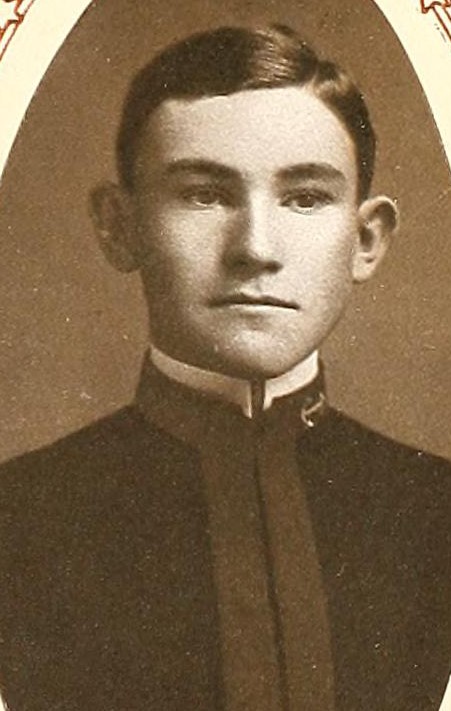
Lee as a US Naval Academy midshipman in 1908 (NHHC)
The author cites numerous examples of Lee’s ship-handling and tactics abilities that further his career as a surface warfare officer. Interestingly, Lee never had command of a battleship but was commanding officer of two destroyers. Two additional tours in Washington, D.C., with the Fleet Training Division (OPNAV 22) solidified his position as a gunnery expert, and his pioneering efforts in development of a Combat Information Center (CIC) set the stage for the major portion of the book and his career: World War Two.

The author details Lee’s preparations and conduct in battle in the Pacific during his three years as “Battleship Commander” and highlights three decisive battle opportunities. At Guadalcanal, Rear Admiral Lee was commander of a task force consisting of two battleships and four destroyers. The November 14-15, 1942, night battle was the first time his units had operated together, and Lee had no opportunity to publish a formal Operations Order, nor was there any common doctrine. U.S. Navy forces opened the battle and had the advantage of radar, but in short order the destroyers at the head of Lee’s column were out of action. The battleship USS South Dakota sustained significant damage and was also out of the fight. Through Lee’s perseverance, the Japanese battleship Kirishima was sunk and a few hours later the Japanese forces withdrew. Lee’s utilization of radar in this battle proved to be the deciding factor and the turning point in the six-month fight for Guadalcanal. He later received his third star and was assigned as Commander, Battleships Pacific Fleet, where he was responsible for fleet battleship doctrine and procedures.
ADM Raymond Spruance, VADM Marc Mitscher, Fleet Admiral Chester Nimitz, and VADM Willis Lee in Feb 1945 (NHHC)
The second opportunity for Lee came on June 19, 1944, at the Battle of the Philippine Sea. The officer in tactical command urged Lee to pursue the Japanese fleet at night and force a surface action. Lee declined, reasoning that there was a lack of training in fleet tactics at night. Although senior US Navy admirals were disappointed, they took no action against Lee. It is ironic that the man who—two years earlier—led a night engagement successfully with a unit that had never operated together would not enter this fight. Lee neglected to take action that could have destroyed a major portion of the Japanese fleet.
VADM Lee in 1944 or 1945 (NHHC)
The final opportunity for Lee to see major combat was on October 24-25, 1944, at Leyte Gulf. The failures at this battle are well-known, especially regarding Admiral William Halsey. Lee was designated commander of Task Force 34 with four fast battleships, seven cruisers, and nineteen destroyers. The battleships had all operated together under Lee a month earlier, practicing tactical exercises. But most of Halsey’s task force, including Lee’s ships, went north in search of Japanese aircraft carriers. Lee sent two messages to Halsey, stating Task Force 34 should remain to cover the San Bernardino Strait, but received no reply. Lee’s battleships went far north of the strait and, when finally detached from the rest of Halsey’s ships, returned too late to face the retreating Japanese navy. Lee could have applied more pressure to make sure Halsey was aware that there was no U.S. Navy coverage at the strait. As a three-star admiral and the officer designated to take over if something happened to Halsey, Lee bears some responsibility for the failure.
RADM Lee receiving the Navy Cross from Admiral Halsey after the Battle of Savo Island in 1942 (NHHC)
Research for Battleship Commander began more than 40 years ago, but little recent research is evident. It is a fair, balanced view of Lee’s life and highlights his superb reputation as a marksman, ship handler, and loyal shipmate. In summary, the author concentrates on Lee’s lasting accomplishments in improving the Navy’s readiness in the areas of shipboard radar, fire control systems, anti-air gunnery, proximity fuses for 5-inch projectiles, and perhaps most important, the development of the CIC concept. VADM Lee is indeed worthy of the title “Battleship Commander,” given his recognized leadership during three years of intense fighting at sea in WWII. I recommend this book, filled with vignettes from family, friends, and shipmates, to learn more about the battleship admiral who spent three years in the Pacific during WWII, and whose total focus was on the readiness of the US Navy.

Thursday, June 24, 2021

Douglas MacArthur and Chester Nimitz: Five-Star Leadership, Part 2

By Lee Duckworth
HRNM Volunteer

Part 1 of this blog is available here.

Personalities

The greatest difference between Douglas MacArthur and Chester Nimitz was in their personality. MacArthur was renowned for being egotistical and seeing himself as invincible and infallible. Nimitz was the antithesis: humble and unemotional.

MacArthur felt he was living out his destiny in his meteoric rise to five-star general. He rarely cracked a smile and seldom used profanity. Nimitz, on the other hand, loved to tell stories and jokes. He enjoyed mingling with the troops and had many friends, both junior and senior.
General MacArthur and his chief of staff on Corregidor, Philippines, 1942
(Wikimedia Commons)
MacArthur was domineering, enigmatic, decisive, highly principled, and outspoken. But he was also egocentric, arrogant, had a love for theatrics, and had few friends. MacArthur was an outstanding strategist and superb at seeing the big picture of the war in the Pacific. He worked long hours and expected his staff to do the same: they needed to be completely loyal and energetic. He “wrapped himself in a cloak of dignified aloofness” and “no one was permitted to forget he was both warrior and aristocrat.”[1] He seemed to live by the concept that “rules are mostly made to be broken.” He was a farsighted administrator but flamboyant and had great moral courage that inspired confidence.
Admiral Nimitz pins the Navy Cross on Doris Miller, 1942
(Naval History and Heritage Command)
Conversely, Nimitz was a more reserved leader, had a will of steel, was humble and a team-builder. He too was a superb strategist and tactician. Nimitz was unflappable and calm and had a great sense of humor, which helped alleviate tension. He led by common sense and example yet avoided the press and publicity. He demonstrated an astonishing coolness under pressure and was known for his quiet manner. Nimitz was hardworking, eager to take charge, rule-abiding and conscientious, and was the consummate organizer. He was superb at the art of delegation, freeing himself from the minute details of his job.

Summary

What can we glean from the background of these five-stars? Admiral Nimitz and General MacArthur were highly intelligent, great strategists, and had loyal followers. As historian D. Clayton James relates, the two men “had much in common. Both had highly trained command minds that cut through underbrush to reach the core of projects and problems. Both had that extraordinary quality of leadership that inspires loyalty; both were endowed with the champion’s will to win. But here the similarity ceases. The admiral seldom rode the emotional pendulum; joy and sorrow would set the general off on lusty zooms or steep dives.”[2] Both were groomed and excelled in their own way. They were both very aware of the political influence they wielded, though MacArthur took more advantage of that influence. Yet, their approach to the vast and seemingly overwhelming responsibilities demonstrates their uniqueness and individuality. MacArthur’s style was "A leadership that kept you at a respectful distance, yet at the same time took you as an esteemed member of his team, and very quickly had you working harder than you had ever worked before in your life, just because of the loyalty, admiration and respect in which he held you."[3]

MacArthur and Nimitz reported to their respective service chiefs on the Joint Chiefs of Staff (JCS) during World War II (MacArthur to General George C. Marshall and Nimitz to Admiral Ernest J. King). Fortunately, the two service chiefs had leadership and personality styles opposite of their corresponding Pacific leaders. King was a notorious workaholic who was driven, outspoken, and extremely demanding. Marshall was the opposite: mellow, calm, and very forward-thinking. King understood Nimitz’s style of leadership and though he pushed hard, he held great respect for Nimitz. Marshall was the perfect foil for MacArthur and knew how to keep him under control. He would wait, sometimes for days, before responding to MacArthur’s messages and demands, completely ignoring them on occasion. Marshall was supportive of MacArthur but never pushed around by him. The two JCS chiefs were perfect matches for MacArthur and Nimitz and supported them extremely well. Had their personalities been exchanged, there may have been bigger battles on the Washington front that there were in the Pacific.
Douglas MacArthur and his staff returning to the Philippines in 1944 
(Wikimedia Commons)
Two of the major actions of WWII in the Pacific highlight their differences: MacArthur’s return to the Philippines and Nimitz at the Battle of Midway. MacArthur’s speech on his return was broadcast all over the Philippines and began: “People of the Philippines, I have returned! By the grace of Almighty God, our forces stand again on Philippine soil…Rally to me!”[4] MacArthur had used the phrase “I shall return” as his clarion for nearly three years and went so far as to have thousands of packets of matchbooks printed and distributed with those words on the cover.

Nimitz, some 30 months earlier (May 1942), flew to Midway a month prior to the battle and inspected the preparations being made to defend the island against the impending Japanese assault. In response to the commander of the ground force’s list of items needed to fight against the Japanese, he asked: “If I get you all these things you say you need, then can you hold Midway?” To the reply of “Yes Sir,” Nimitz smiled and began to look relaxed. “In his usual quiet way he thoroughly alerted the defenders of the atoll and at the same time instilled confidence in them.”[5]
Nimitz explains his recommended strategy at a July 1944 conference with MacArthur, President Roosevelt, and Admiral Leahy. (Wikimedia Commons)
Perhaps most telling is President Franklin Delano Roosevelt’s comments during the July, 1944 Pearl Harbor meeting to discuss the Formosa/Philippines strategy. FDR told aides that each man was intelligent, insightful, and gentlemanly. They were consummate professionals, both very respectful of each other and committed to working together.

Nimitz and MacArthur stayed the course, and in their unique styles, triumphed in the war years. It is clear that they were the right men, in the right place, at a most critical time to lead the allies to victory in the Pacific in the Second World War.

[1] James, Vol II, 77, 81
[2] James, Vol II, 398-399
[3] Kinni, 163
[4]  James, Vol II, 558
[5] Potter, 78


Recommended Reading

Borneman, Walter R. The Admirals: Nimitz, Halsey, Leahy, and King: The Five-star Admirals who won the War at Sea. Little, Brown and Co., New York, NY, 2012.

Borneman, Walter R. MacArthur at War: World War II in the Pacific. Little, Brown & Co, New York, NY, 2016.

Hoyt, Edwin P. How They Won the War in the Pacific: Nimitz and His Admirals. Lyons Press, Guilford, CT, 1970.

James, D. Clayton. The Years of MacArthur 1880-1941, Volume I; The Years of MacArthur 1941-1945, Volume II. Houghton Mifflin Company, Boston, MA, 1970 and 1975.

Kinni, Theodore and Donna. No Substitute for Victory: Lessons in Strategy and Leadership from Douglas MacArthur. Prentice Hall, Upper Saddle River, NJ, 2005.

Manchester, William. American Caesar: Douglas MacArthur 1880-1964. Little, Brown & Co., Boston, MA, 1978.

Potter, E. B. Nimitz. Naval Institute Press, Annapolis, MD, 1976.

Spector, Ronald H. At War at Sea: Sailors and Naval Combat in the Twentieth Century. Penguin & Putnam, New York, NY, 2001.

Stavridis, Admiral James. Sailing True North; Ten Admirals and the Voyage of Character. Penguin Press, New York, NY, 2019.

Toll, Ian W. Twilight of the Gods: War in the Western Pacific, 1944-1945. W. W. Norton & Co, New York, NY, 2020.

Thursday, June 17, 2021

Douglas MacArthur and Chester Nimitz: Five-Star Leadership, Part 1

By Lee Duckworth
HRNM Volunteer 

A study of the background and early careers of General Douglas MacArthur and Admiral Chester Nimitz is essential to understanding the leadership styles and personalities of the two senior five-star officers in the Second World War’s Pacific Theater. MacArthur appears to have been born with the proverbial “silver spoon” and Nimitz came from a hard scrabble background. The marked differences in their upbringing and personality traits are reflected in their dissimilar leadership styles, yet both are venerated for their accomplishments during the Second World War.

The Early Years

MacArthur has an almost unmatched pedigree. On his paternal side, his grandfather was Lieutenant Governor of the state of Wisconsin and a Justice of the Supreme Court of Washington DC; his father was a Medal of Honor recipient and three-star army general (highest rank in the US Army at that time). From his mother’s side he was related to Winston Churchill and Franklin Roosevelt. MacArthur’s mother, Mary “Pinky” Hardy MacArthur, played prominently in his career and unhesitatingly reminded senior officers who had served under her husband to see that her son was promoted. His father, Arthur MacArthur, was stationed throughout the West during the late 1800s, and that was the place where Douglas learned first-hand about riding horses, the cavalry, and the army.
A young Douglas MacArthur (Wikimedia Commons)
MacArthur was seemingly a shoo-in for West Point, although it took three attempts for him to be accepted. His father was stationed in the Philippines during much of the time Douglas was at the military academy, so his mother decided to spend all four years there and met almost daily with her son. Despite the hazing he received for being the son of a senior officer and having his mother watch over him, he rose to be the First Captain (head of the Corps of Cadets) and graduated first in the class of 1903.

By contrast, Nimitz came from a completely opposite background. His family was very poor and his father died before he was born. He too was raised by a strong mother, Anna Nimitz, who concentrated on keeping her son physically fit. Nimitz was strongly influenced by his paternal grandfather, Charles Henry Nimitz, who was a former Texas Ranger and Confederate Civil War veteran. The grandfather had served in the German merchant marine and was an innkeeper who loved to tell stories of his life at sea and in the military. He counseled his grandson to “…learn all you can, then do your best and don’t worry—especially about things over which you have no control.”[1]
Midshipman Chester Nimitz with his grandfather, c. 1905
(Naval History and Heritage Command)
Nimitz grew up in the land-locked German immigrant city of Fredericksburg, Texas, and was an excellent student. His family could not afford college so an appointment to a military academy was Chester’s only avenue for further education. He studied hard for the better part of a year in preparation for the Naval Academy’s entrance exam, besting all other candidates and was admitted to the class of 1905.

Commissioning and Early Careers

Nimitz in 1905
(Wikimedia Commons)
Both men were extremely intelligent and academy classmates sensed they were destined for great military futures. Nimitz graduated 7th in his class and immediately after graduation went to sea on a destroyer. He yearned for command as a young officer, receiving his first command as the CO of USS Decatur, a torpedo boat destroyer. As a 22-year-old ensign he managed to run it aground in the Philippines and was court-martialed for the incident. He accepted full responsibility and learned to never let down his guard. Because Nimitz had a strong engineering background and proficiency in the German language, in 1913 he was selected to serve in Germany, learning about diesel engines and their application in submarines. He later became a submariner, where he spent the majority of his career prior to reaching flag rank.

MacArthur as a student in 1897
(Wikimedia Commons)
MacArthur elected to go into the Army Corps of Engineers and didn’t distinguish himself initially. While stationed in Washington DC he was more interested in the social scene serving as a temporary aide in the White House--his evaluations reflected his less than enthusiastic interest in engineering. In 1905-1906 he served as aide to his father in the Philippines, and along with his mother, made a nine-month tour of Asia observing military capabilities and operations in various countries from Japan to India. This was the first of his four assignments to Asia, where he fell in love with the culture and people. He had the benefit of learning about leadership from a senior officer perspective at his father’s knee. From him he was urged to be bold, do the unexpected, and to act quickly and decisively.

An added benefit of being the son of a three-star general officer was that Douglas was asked for by name to fill vital positions. The posting that paid the most dividends was to Washington DC in 1912, where he joined the Army Staff and later served as its first Public Relations person (then called the Bureau of Information). He became a favorite of Secretary of War Newton Baker and his career soared.

World War I

MacArthur was in the trenches and on the front lines in Europe in 1917-1918 and was the nation’s most decorated soldier, earning two Distinguished Service Crosses and seven Silver Stars. He was promoted from major to colonel (skipping over Lt Col) and by war’s end, was a brigadier general. MacArthur saw firsthand the futility of fighting from the trenches and the use of direct assault. He applied those lessons in his World War II island-hopping campaigns.

Conversely, during World War I, Nimitz served on a surface ship that never saw combat. He was however, instrumental in pioneering the underway refueling of ships from auxiliary vessels, which stood him in good stead for World War II.

Check back next week for part 2 of the Nimitz and MacArthur story!


[1] Potter, E. B. Nimitz. Naval Institute Press, Annapolis, MD (1976)

Thursday, April 8, 2021

Recent Reads: The Quiet Warrior: A Biography of Admiral Raymond A. Spruance by Thomas Buell


Admiral Raymond Spruance seen in April 1944 (Naval History and Heritage Command)
Reviewed by Lee Duckworth
HRNM Docent

The impetus for writing The Quiet Warrior was a 1963 interview with Admiral Raymond A. Spruance and follow on work at the Naval War College in the early 1970s. Author Thomas B. Buell, CDR USN (Ret.) used extensive interviews with the Spruance family and members of the admiral’s staff, letters, official reports and oral histories in writing his book. The author spends some time on Spruance’s early years and post-retirement as Ambassador to the Philippines but concentrates on his US Navy WWII career.

Buell alternates chapters chronologically with the preparation and planning for an upcoming battle, followed by the ensuing battle and results. Woven in are vignettes about home life. He makes excellent use of how Spruance applied lessons learned from previous battles into planning for the next battle.

How does a Navy Captain with only a shipboard background make his way in three years to four-star rank and command of the largest naval battle ever fought? The biggest force Spruance ever commanded prior to the June 4-6, 1942 Battle of Midway was a cruiser division of only four cruisers. Yet he accomplished this meteoric rise through his professional competence, intelligence and leadership traits. He was a listener, student of naval strategy and tactics, and a master at delegating work (in fact, he admits to being lazy and wanted others to do the work—and receive the credit). Spruance believed in being at the front and recognized that accurate and timely intelligence was imperative to success. Perhaps most importantly, he had the ability to see the big picture and hired good people to work for him.

Planes of Torpedo Squadron Six (VT-6) prepare to launch off USS Enterprise (CV 6) on the morning of June 4, 1942 during the Battle of Midway. Enterprise was Spruance's flagship during the battle. (Naval History and Heritage Command)

With no aviation experience, Spruance was thrust into the role of leading a two-carrier task force in battle with the Japanese Navy at Midway. He was seemingly unperturbed as Admiral Chester Nimitz gave him excellent intelligence and broad guidance: he would be “…governed by the principle of calculated risk” which he was to interpret to mean to avoid exposure of his force without a good prospect of inflicting greater damage to the enemy. With two days advance notice, he set sail aboard USS Enterprise for Midway.

The author doesn’t delve deeply into the details of the Battle of Midway but he addresses the controversy surrounding Spruance and his perceived lack of aggressiveness in this battle, as well as others over the next three years. Buell puts Spruance on a bit of a pedestal and states that he was operating under the principle of calculated risk and his plan was bold, arguing that there was no lack of aggressiveness. The author admits that there were delays in the June 4 aircraft launch and a number of miscommunications during the course of operating the carrier group, but Spruance confidently launched his entire air wing. Another major mistake was Spruance’s failure to launch search planes on June 4 and 5. Spruance made his June 5th decision to turn on shipboard lights to assist aviators in finding the US fleet at night. This was a conscious decision made prior to the mid-afternoon launch, knowing it would be dark on their return. There is still much controversy nearly 80 years later as to whether he should have pressed the attack but in Buell’s mind, Spruance wasn’t being too safety-conscious and deserves the title “warrior.”

Spruance’s task force grew in size and complexity as the war continued and he attacked the Marianas, Gilberts, Marshalls, Iwo Jima, and Okinawa from 1943 to 1945. By the latter battle his command had grown to 1,500 ships (1,200 of them were amphibious) and included 16 aircraft carriers.

Admiral Chester Nimitz (left), Spruance (center), and Marine General Holland Smith (right, with helmet), looking out from a 20mm gun tub while inspecting preparations for the Gilbert Islands campaign in October 1943. (Naval History and Heritage Command)
Who was this now four-star admiral who very much avoided the public and publicity and was a private man who rarely let feelings show? Described by one of his staff: “He was like a sphinx…” and thoroughly disliked public speaking and talking with reporters, a real contrast to his counterpart Admiral “Bull” Halsey. His personal quirks included ignoring people when they were talking to him or requesting a decision, and taking random long hikes of ten miles or more nearly every day. He would attempt to bring members of his staff to accompany him, despite the pleas that they had too much work to do.
Admiral William "Bull" Halsey (left) with Spruance aboard USS New Mexico (BB 40) off of Okinawa in April 1945 (Naval History and Heritage Command) 

As WWII progressed, Spruance clearly became a master at seeing the big picture and felt he had to be in the vanguard rather than remain in the rear. He rarely acted as the Officer in Tactical Command as he left that to his junior admirals so he could concentrate on executing the battle plan. Spruance left the planning to his experts and exercised overall command. He refused to become involved in personnel squabbles and let others intervene or just let it fester in the hope it would resolve itself.

How did this “quiet warrior” thrive during WWII when so many (e.g. Halsey, King, and MacArthur) seemingly had to be in the spotlight? Spruance won over his superiors and subordinates with his intellect, hand’s-off approach and total focus on the big picture. He was an advocate of Mahan and felt that surprise and striking first were essential to victory. It is difficult to fault this thinking as he had successful outcomes in every major battle he fought.
Spruance (right) seen with Nimitz (left) and Admiral Ernest King (center) aboard USS Indianapolis (CA 35) in July 1944. (Naval History and Heritage Command)

Spruance was superb in his delegation of authority and often took a long time to make decisions and was fearful of making mistakes. His lack of aviation, amphibious and logistics experience didn’t seem to bother him and he became adept at each as the war progressed. He was scrupulous in planning for the concentration of his naval assets and saw it as a force multiplier in offensive military operations.

War for Admiral Spruance become one of a scale and complexity that will not be seen again. The Quiet Warrior provides excellent insight into Spruance’s thought process and how he led naval forces during WWII. He was successful because he didn’t overmanage from afar, trusted his intelligence staff, had faith in those under him, and had the support and confidence of admirals Nimitz and King. Could he have been more aggressive and pressed the attack at Midway and the Philippine Sea? Most certainly, but both battles are regarded as tremendous American victories and Spruance took the more cautious approach to ensure the fleet would survive to fight another day.

Friday, January 22, 2021

Recent Reads: Admiral John S. McCain and the Triumph of Naval Air Power by William F. Trimble


Admiral John S. McCain in the early 1940s (Naval History and Heritage Command)

Reviewed by Dr. Ira Hanna
HRNM Docent

Several books have been written about Admiral John S. McCain but none of them cover all aspects of this unusual naval officer. A Leader Born by Alton Keith Gilbert concentrated on the personality of the man and his accomplishments as a carrier commander. His grandson, Senator John S. McCain III, wrote a memoir that captured what it meant to follow in his footsteps. This book is different! Author William Trimble meticulously described McCain’s rise through the “black shoe” navy, his decision to become a naval aviator at the age of 52, and his leadership as a Fast Carrier Task Force Commander during some of the most important WWII naval battles leading to the Japanese surrender. Descriptions of McCain by his contemporaries, his staff members, squadron commanders and their pilots were particularly important to the total picture of the man. 

Admiral McCain on the bridge of his flagship, early 1945 (Naval History and Heritage Command)

If you are interested in the strategic as well as the technical side of planning and executing wartime fleet operations, this is the book for you. The almost minute by minute description of ship maneuvers during naval battles is enough to make you feel like you are right there. Unfortunately, this causes a problem. Sometimes, the details cloud the overall picture. 

There are even messages that show the pettiness between flag officers in the competition for fleet and task force command. Marc Mitscher still considered McCain a “Johnny Come Lately” to naval aviation. In comparison, Ernest King and William Halsey were friendly and supportive. Because of McCain’s experience with battleships and cruisers, he knew their capabilities and weaknesses. Once integrated into the naval air community, he recognized the usefulness of fast carriers and immediately understood the importance of his carriers to protect the fleet and provide current intelligence for Fleet commanders. He was noted for his aggressiveness and the use of bombers and fighters as deadly attack weapons when enemy ships were in range. His Task Force sometimes numbered thirteen carries that successfully protected the invasions of Iwo Jima and Okinawa. He saw the strategic importance of carriers and correctly predicted that the super carriers built after WWII would become the expression of America’s power throughout the world.
McCain's Task Force 38 sailing in August 1945 right after the Japanese surrender (Naval History and Heritage Command)

McCain’s journey to become one of the most important task force commanders in WWII was not easy. In February 1942, President Franklin Roosevelt was anxious to see some naval action to blunt the Japanese victories in the Pacific. He instructed Secretary of the Navy, Frank Knox to identify the forty admirals he considered “most competent” (Trimble’s term) to prosecute the naval war. Knox formed a committee of nine “high ranking and experienced” officers as an unofficial “selection board.” King and Harold Stark were immediately selected to be on the board and also the top two on the list. McCain barely made the list with just six votes. So at the beginning of the war, he spent several years working in stateside commands that eventually helped him in his seagoing commands. Still, he longed to be where the action was.

Admirals John S. McCain and William "Bull" Halsey talking aboard USS New Jersey (BB 62) on the way to the Philippines in December 1944 (Wikipedia)

In March 1944, Ernest King (CNO) chose McCain to command Task Force 38, part of Halsey’s Third Fleet. In May, Chester Nimitz (CIC Pacific Ocean Areas) and King agreed to the rotation of fleet and task force commanders and staffs. Bill Halsey’s Third Fleet would trade with Raymond Spruance’s Fifth Fleet at appropriate intervals. This was known as the “two platoon” system and continued till the end of the war. In the rotation that usually occurred after each major mission, Task Force 58 under Marc Mitscher (Spruance’s Fleet) would become Task Force 38 under McCain (Halsey’s Fleet). During these relief times, McCain not only would get a chance to visit his family but often wrote articles that appeared in the Saturday Evening Post. He was interviewed often by the press and regaled reporters about battle scenes in his most “colorful” boatswain-mate language. One of these landed him on the front page of Collier’s Magazine. In every speech, McCain guaranteed America’s victory over Japan and was a cheerleader for the Navy’s part in it. He even testified before Congress that the Navy’s air arm was crucial to wining the war.

McCain in his quarters aboard USS Hancock (CV 19) (Naval History and Heritage Command)
The naval battles of WWII took a toll of ships and men and the admirals were no exception. Halsey had shingles so bad that he had to be sent back to the states to recover. McCain just wore himself out. After he was relieved of the command of Task Force 38 on September 1, 1945, he attended the Japanese Surrender Ceremony on the battleship Missouri (BB 63), and then left for Hawaii. When he arrived, the reporters besieged him and wanted firsthand descriptions of the ceremony. As Trimble put it, the “explosive little admiral did not disappoint them.” A few days later, he arrived in San Diego and on September 6, 1945 a homecoming party was organized at his home. About 4pm, he became ill and went to his bedroom. A neighbor who was a naval surgeon was summoned, but despite his efforts, VADM John S. McCain USN died a little after 5pm, just a month past his 61st birthday. Three years later, he was elevated posthumously to full admiral by Congress.

McCain and an operations officer working on an operations plan on USS Hancock (CV 19) (Naval History and Heritage Command)

In his prologue, Trimble described how McCain showed he cared as much for his pilots as their missions. “McCain wanted to hear more than statistics.” After each mission, he personally would ask pilots “What did you see and what did you do?” Then he would tell them “You have performed one of the most dangerous as well as necessary missions. Congratulations. Glad you are back.” McCain cared so much for these junior airmen and their futures that he ordered that they be given opportunities to qualify as officers of the deck underway, later known as Surface Warfare Officers. This is why he was known as “The Airman’s Admiral,” which just as well could have been the title of this book.

Trimble concluded that “few among his peers bore the burden of command in such broad dimensions of naval aviation – patrol aviation, carrier, task group, and task force command, administration, technological change, personnel, and logistics – as did Admiral John S. McCain.”