Showing posts with label battleship. Show all posts

Thursday, April 21, 2022

Battleship Commander: The Life of Vice Admiral Willis A. Lee, Jr.

By Paul Stillwell

Reviewed by Lee Duckworth
HRNM Docent
Paul Stillwell’s biography of Vice Admiral Willis A. Lee Jr. is a book 40 years in the making and finally published in 2021. It details the life of Lee and focuses on his leadership experiences in the Second World War. Lee’s early life is unremarkable, other than the fact that he was an expert marksman. This shooting ability figures prominently during his time at the US Naval Academy (1904-1908) and participation in the 1920 Olympics. After graduation, Lee had assignments to various ships, including a battleship, cruiser/receiving ship, gunboat on the Yangtze River Patrol, and submarine tender. Stateside, his earliest shore duty was with the Bureau of Ordnance and later with the Fleet Training Division of the staff of the Chief of Naval Operations, where he made his reputation as a gunnery and fire control systems expert.
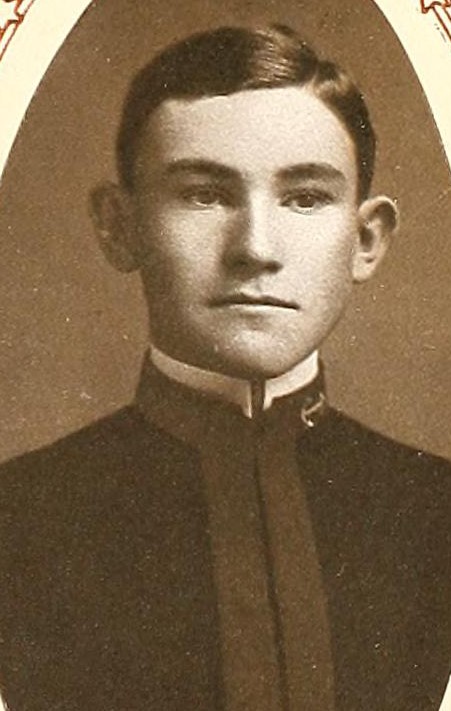
Lee as a US Naval Academy midshipman in 1908 (NHHC)
The author cites numerous examples of Lee’s ship-handling and tactics abilities that further his career as a surface warfare officer. Interestingly, Lee never had command of a battleship but was commanding officer of two destroyers. Two additional tours in Washington, D.C., with the Fleet Training Division (OPNAV 22) solidified his position as a gunnery expert, and his pioneering efforts in development of a Combat Information Center (CIC) set the stage for the major portion of the book and his career: World War Two.

The author details Lee’s preparations and conduct in battle in the Pacific during his three years as “Battleship Commander” and highlights three decisive battle opportunities. At Guadalcanal, Rear Admiral Lee was commander of a task force consisting of two battleships and four destroyers. The November 14-15, 1942, night battle was the first time his units had operated together, and Lee had no opportunity to publish a formal Operations Order, nor was there any common doctrine. U.S. Navy forces opened the battle and had the advantage of radar, but in short order the destroyers at the head of Lee’s column were out of action. The battleship USS South Dakota sustained significant damage and was also out of the fight. Through Lee’s perseverance, the Japanese battleship Kirishima was sunk and a few hours later the Japanese forces withdrew. Lee’s utilization of radar in this battle proved to be the deciding factor and the turning point in the six-month fight for Guadalcanal. He later received his third star and was assigned as Commander, Battleships Pacific Fleet, where he was responsible for fleet battleship doctrine and procedures.
ADM Raymond Spruance, VADM Marc Mitscher, Fleet Admiral Chester Nimitz, and VADM Willis Lee in Feb 1945 (NHHC)
The second opportunity for Lee came on June 19, 1944, at the Battle of the Philippine Sea. The officer in tactical command urged Lee to pursue the Japanese fleet at night and force a surface action. Lee declined, reasoning that there was a lack of training in fleet tactics at night. Although senior US Navy admirals were disappointed, they took no action against Lee. It is ironic that the man who—two years earlier—led a night engagement successfully with a unit that had never operated together would not enter this fight. Lee neglected to take action that could have destroyed a major portion of the Japanese fleet.
VADM Lee in 1944 or 1945 (NHHC)
The final opportunity for Lee to see major combat was on October 24-25, 1944, at Leyte Gulf. The failures at this battle are well-known, especially regarding Admiral William Halsey. Lee was designated commander of Task Force 34 with four fast battleships, seven cruisers, and nineteen destroyers. The battleships had all operated together under Lee a month earlier, practicing tactical exercises. But most of Halsey’s task force, including Lee’s ships, went north in search of Japanese aircraft carriers. Lee sent two messages to Halsey, stating Task Force 34 should remain to cover the San Bernardino Strait, but received no reply. Lee’s battleships went far north of the strait and, when finally detached from the rest of Halsey’s ships, returned too late to face the retreating Japanese navy. Lee could have applied more pressure to make sure Halsey was aware that there was no U.S. Navy coverage at the strait. As a three-star admiral and the officer designated to take over if something happened to Halsey, Lee bears some responsibility for the failure.
RADM Lee receiving the Navy Cross from Admiral Halsey after the Battle of Savo Island in 1942 (NHHC)
Research for Battleship Commander began more than 40 years ago, but little recent research is evident. It is a fair, balanced view of Lee’s life and highlights his superb reputation as a marksman, ship handler, and loyal shipmate. In summary, the author concentrates on Lee’s lasting accomplishments in improving the Navy’s readiness in the areas of shipboard radar, fire control systems, anti-air gunnery, proximity fuses for 5-inch projectiles, and perhaps most important, the development of the CIC concept. VADM Lee is indeed worthy of the title “Battleship Commander,” given his recognized leadership during three years of intense fighting at sea in WWII. I recommend this book, filled with vignettes from family, friends, and shipmates, to learn more about the battleship admiral who spent three years in the Pacific during WWII, and whose total focus was on the readiness of the US Navy.

Tuesday, September 1, 2020

VJ Day Artifact Series (Part 3): USS Missouri (BB 63) Telephone

 To commemorate the 75th anniversary of the end of World War II, we asked our colleagues at our sister museums for some interesting artifacts that highlight unique aspects of the Navy during the war. This week we have an artifact on display at our sister museum, the National Museum of the United States Navy in Washington, D.C. 

Japanese Surrender Ceremony aboard USS Missouri, September 2, 1945. (Naval History and Heritage Command)

By Wesley Schwenk
Collections Manager, National Museum of the United States Navy


After being commissioned in 1944, USS Missouri (BB 63) joined the fleet outfitted with all of the regulation bells and whistles, including the telephone pictured here. The entirety of Missouri's service saw the use of this telephone. This Type D telephone, produced by the Automatic Electric Company, was built in its Chicago, Illinois plant. Not just the Type D, but many other phones made by this company were staples of United States Navy shipboard communication equipment. The phone gave the user the capability to speak with or take calls from various parts of the ship allowing for speedy responses and efficient decision making.

Type D telephone from USS Missouri (on loan to NMUSN from Curator Branch, Naval History and Heritage Command)

Crewmen use a telephone in the radio room aboard sister ship USS New Jersey (BB 62) in 1944. (Naval History and Heritage Command)
This object is an interesting one in and of itself because of the missions and objectives that were communicated through it. That includes the vessel being attached to Task Force 58 in the Asiatic-Pacific Theater, launching air strikes against enemy targets, and firing 16-inch gun bombardment support prior and during the Iwo Jima and Okinawa landings. This telephone also assisted in communications for the striking of the Japanese mainland in 1945 and cemented Missouri's place among the Pacific fleet. 
USS Missouri's mighty 16-inch guns roar in 1944. Six projectiles can be seen in flight to the right. (Naval History and Heritage Command)
Finally, this object remained on board and in use for the formal Japanese surrender ceremony on September 2, 1945. This artifact allowed USS Missouri (BB 63) to succeed during World War II and eventually proved to be one small but important part of her 48 years of naval service.
The Japanese delegation arrive for the surrender ceremony on September 2, 1945. (Naval History and Heritage Command) 

Thursday, October 23, 2014

Battleship Gunnery at the Battle of Surigao Strait


This gunnery trophy plaque off USS West Virginia (BB-48) hangs in our World War II gallery. As can be seen on the plaque, West Virginia won it five times in the first ten years after it was commissioned in December 1923. Although the plaque dates from the interwar period, the sailors of West Virginia lived up to their ship’s tradition during WWII. Built at Newport News right after WWI, it was at Pearl Harbor when the Japanese attacked on December 7, 1941. Rebuilt and brought back into service, the ship was part of the invasion fleet at Leyte Gulf in October 1944. Sailing alongside it were several other survivors of Pearl Harbor, including other Newport News-built battleships USS Maryland (BB-46) and USS Pennsylvania (BB-38).

In October 1944, the Japanese launched an all-out naval assault on the invasion fleet in Leyte Gulf. Their plan had multiple moving parts which led to problems. The Japanese divided their fleet into three sections. First a diversion force in the north would draw the main American force (under Halsey) away from the invasion fleet. Then two fleets would deploy in a pincer formation to attack the vulnerable landing and supply ships. The southern force (divided into two parts) was to head through the Surigao Strait.

Navy planes spotted and attacked the first part of the southern force under Vice Admiral Shoji Nishimura on the morning of October 24 as it cruised south of the Philippine island of Negros. The detection of this force allowed Admiral Jesse B. Oldendorf, in charge of bombardment/fire support for the invasion fleet, to set a trap for when the enemy force entered Surigao Strait that night. First the Japanese fleet had to make it through PT (patrol torpedo) boat attacks, then a crossfire of more torpedoes launched from destroyers, before having to deal with both a line of cruisers and a line of battleships, which would be maneuvering in the classic naval tactic of “crossing the T.” This tactic would allow for the greatest number of guns to bear on the Japanese while their return fire was largely limited to the lead ship. Besides West Virginia, Maryland, and Pennsylvania, the American battleship force included two other Pearl Harbor survivors: USS Tennessee (BB-43) and USS California (BB-44). The sixth battleship included in the force was the Newport News-built battleship USS Mississippi (BB-41), which was doing escort duty near Iceland when the war started.

As the Japanese fleet headed into Surigao Strait, the torpedoes from the PT boats missed, but the destroyers had much better success. The U.S. destroyers were deadly with their torpedo attack, as they sank the battleship Fuso (one of two in the first striking force) and a destroyer, crippled another destroyer, and damaged another destroyer enough that it limped back the way it came. The flagship Yamashiro was also damaged but continued on toward the strait, along with the cruiser Mogami and a remaining destroyer. The second half of the Japanese force (under Adm. Shima) was nearly 30 miles behind, as strict radio silence had prevented close coordination. 

As opposed to their predecessors who earned the gunnery plaque, the sailors onboard West Virginia were aided by a new fire control radar system (Mk 8) which enabled them to detect the enemy at a great distance. In the early morning hours of October 25, the ship’s radar picked up the Japanese force at 42,000 yards (nearly 24 miles, or the length of 140 football fields). By the time they had approached to 30,000 yards, the gunnery crews had a firing solution, and when the Japanese ships approached to about 26,000 yards (nearly 15 miles) away, the 16-inch guns opened fire shortly before 0400 on October 25.
Mogami was badly damaged at the Battle of Midway, so the two aft turrets were removed and it was converted to an “aircraft cruiser.”
Yamashiro was the focus of most of the fire emanating from the American battleships and cruisers. It was hit numerous times and quickly caught on fire. In addition to the gunfire pouring in, the Japanese battleship was struck by more torpedoes, and it sank less than 30 minutes after West Virginia opened fire. Mogami was also badly damaged and on fire. In roughly 15 minutes of engagement, the U.S. battleships alone fired 285 (16 or 14-inch) armor piercing shells. West Virginia expended near half of the armor piercing ammunition, firing 93 rounds from its eight 16-inch guns. The old battle wagons resurrected from Pearl Harbor had exacted their revenge on the Japanese navy.

Shima’s force arrived too late to assist Nishimura’s ships and quickly fled the scene. Some U.S. cruisers and destroyers pursued them, sinking another destroyer and causing fatal damage to Mogami. The Japanese thrust from the south had utterly failed, but the northern part of the pincer was still a major threat, although Adm. Halsey inexplicably ignored it. The consequences of this decision would be readily apparent when the sun came up east of Samar on October 25, 1944. 

Tuesday, October 7, 2014

Naut(ical) Flix


Almost 80 years before the Navy squared off against aliens in the movie Battleship (2012),
they brought the fight to King Kong (below) in 1933. (Photos: Wikia.com/ USNI News)


Since before The Fighting Seabees and Thirty Seconds Over Tokyo debuted 70 years ago, Hollywood has played a critical role in crafting the popular perception of the United States Navy. With the release of recent films such as Act of Valor, Lone Survivor, and even Battleship, it is evident that the relationship between Hollywood and the U.S. Navy is still going strong.  This fact is shown by the location of the Navy Office of Information West (NAVINFOWEST) in Los Angeles.  NAVINFOWEST’s purpose is to assist the film industry in making movies involving the United States Navy.  In addition, the office maintains and develops contacts with the entertainment industry for the purpose of sharing the military's story, as well as facilitating any film and television messages relevant to the military.  Visit their website or Facebook page for more information on how the US Navy is working with the film industry.

Even the Hampton Roads Naval Museum makes use of NAVINFOWEST when we receive film requests. All production companies must forward their requests through NAVINFOWEST for final approval before we can coordinate film projects on-site.  Decisions are made in accordance with NAVINFOWEST’s mission to “enhance public awareness and further the accurate portrayal of the U.S. Navy’s latest technologies, ships and highly trained personnel.”

If you are interested in reading more about the relationship between Hollywood and our military, take a look at books from film and military historian Lawrence Suid.  Dr. Suid’s first book, Guts & Glory (Addison-Wesley, 1978), became the definitive study of the relationship between the film industry and the armed services.  The University Press of Kentucky published a revised, expanded edition of the book in June 2002, which carries the story from the Biograph Company's Navy films shown at the 1904 St. Louis World's Fair through Black Hawk Down and We Were Soldiers.  Dr. Suid also wrote Sailing on the Silver Screen (The Naval Institute Press, 1996), which focused on the symbiotic relationship between the United States Navy and the motion picture industry. 

What is your favorite Navy film?

(This blog post was written by HRNM Public Relations Coordinator Susanne Greene.)

Tuesday, May 13, 2014

Clipper Battleship Mississippi at Newport News Shipbuilding - 1917


This is a photograph of the battleship Mississippi (BB-41) being launched from Newport News Shipbuilding into the James River on January 25, 1917. Displacing 31,000-tons and equipped with twelve 14-inch/50 rifles, Mississippi and her sister ships were the centerpieces of Secretary of the Navy Josephus Daniels' "Second-to-None" shipbuilding program.

From this angle, the battleship looks like any other battleship constructed in the previous thirty years. Fortunately, a photographer with an eye for detail took a picture of the battleship from the starboard side a few hours before workers launched the ship. Notice that the bow has a very sharp angle, like a razor blade. This was called a "clipper bow."

Taking a page from the clipper ships of the 19th century, naval architects decided to break with tradition on battleship bows with the New Mexico-class battleships, of which Mississippi was the third ship of the class. As the concept of this bow came from wooden clipper sail vessels, architects labeled the bow a "clipper bow." Older classes of battleships, such as Pennsylvania, had what was called a "straight stem" bow. Even older ships had what was called a "bell bow." Commodore Richard Meade (nephew of Civil War General George Meade) wrote about the problems with non-clipper bowed ships: "There was no doubt something graceful and majestic about the aspect of these bows and they buffeted the waves triumphantly. Meanwhile, the vessel was engaged in something other than its duty."

Clipper bows allowed a ship to slice through a wave, instead of going over it, allowing the ship to navigate more efficiently. While the clipper bow had been known about for sometime, the Navy did not adopt the design until the New Mexico-class ships and was subsequently used on other types of vessels, such as heavy and light cruisers. In time, the clipper bow was found to have its flaws, namely water pouring over the decks in heavy seas. This led architects to develop the "hurricane bow" found on Iowa-class battleships.


1916 artist sketch of the New Mexico-class battleship

Tuesday, April 22, 2014

Local Sailors Engaged at the Battle of Vera Cruz, 1914

As the diplomatic crisis with Mexican military government continued to deteriorate, President Woodrow Wilson decided to act. Each of the battleships off of Vera Cruz was to assemble a landing team of armed Sailors and Marine detachments. Reinforced by land-based Marines, the force landed with orders to seize the city's custom house and secure the city. The landing itself went on without much issue. But shortly after the landing, local Mexican forces opened fire on the Americans. Here are some of the images we have of sailors from locally-based ships preparing for action or already in the middle of it.

You can see other images in our collection of the Vera Cruz intervention here,  here, and here. For an excellent political and military overview of the expedition, we encourage you to read naval historian Jack Sweetman's Naval History magazine article or his book The Landing at Veracruz: 1914.

Sailors from USS Michigan's (BB-27) Fifth Division make final preparations to go ashore at Vera Cruz.  While most sailors went into combat wearing either their summer whites or winter blues, Michigan's sailors felt their uniform needed to be more suitable for possible urban combat.  They decided on a khaki-colored uniform.  As this was not standard issue, the sailors soaked their uniforms in the battleship's large coffee vats and boiled them in hot coffee.  During anti-sniper sweeps, one Michigan sailor was credited with taking out an enemy sniper from 100 yards away at night with one shot from his Colt revolver.   
Signalmen from the USS Florida (BB-30) detachment prepare to go ashore.  During the fighting, these men exposed themselves to enemy fire to keep American flag officers informed on the progress of the battle. 

USS Louisiana's (BB-19) company of Sailors and Marines prepare to land at a moment's notice (note that the ship is underway).  While Michigan's and Louisiana's companies arrived too late for the April 21-22 street fight, American flag officers welcomed their arrival and used them to help secure the city and the outlying areas.

USS Utah (BB-31) sailors in action during the heavy fighting with Mexican forces on April 21.  The Mexican forces consisted of Mexican Federal soldiers, local militiamen, and Mexican Naval cadets.

Sailors and Marines, possibly from Florida's company, take up anti-sniper positions.  Once the heavy fighting stopped on April 22, Mexican soldiers constantly harassed American forces with snipers. 

The Newport News-built and locally based USS Montana (ACR-13) gets underway for New York City, carrying twenty-two American Sailors and Marines killed in the fighting.  The fallen were given a public funeral in New York City. 

Wednesday, April 16, 2014

Battleship Squadron Leaves For Mexico, 1914

A newspaper photograph of Atlantic Fleet battleships deploying from Hampton Roads to Mexico,
April 15, 1914.  It should be noted that the newspaper's caption have the wrong ship names.
One hundred years ago yesterday, acting on instructions from President Woodrow Wilson, Secretary of the Navy Josephus Daniels ordered the Hampton Roads-based ships of the Atlantic Fleet to mobilize and head to the east coast of Mexico. The first squadron to deploy included the new battleships USS Arkansas (BB-33), USS Utah (BB-31), and Florida (BB-30); the older battleships USS New Jersey (BB-16) and USS New Hampshire (BB-25); and the dispatch boat/armed yacht USS Yankton. Daniels had specifically ordered the squadron to Tampico and Vera Cruz. Daniels deployed the squadron of heavy ships to reinforce a smaller squadron already on the scene.

The deployment of American battleships came from a culmination of a series of international incidents. A few days before, Mexican authorities had arrested several American sailors in Tampico, and later a Marine who got lost while trying to deliver official mail. These arrests occurred during the latest civil war in Mexico. There was also an American belief that European powers were attempting to intervene in the war. Thus, tensions between Mexico and the United States were high.

Mexican authorities agreed to release the American servicemen, but some senior U.S. Naval officers, and later President Wilson himself, beleived American honor had been insulted. They demanded official apology and a 21-gun salute to the American flag by the Mexican government. When the Mexican reply to the American demands was not forthcoming quickly enough, Wilson put the Navy's ships on alert.

While Assistant Secretary of the Navy Franklin Roosevelt commented to the press that the Navy was prepared for anything, there is evidence that the mobilization order caught the Atlantic Fleet somewhat off guard. Several of the ships were not prepared for an extended deployment. New Hampshire's sailors, for example, worked through the night and early morning of April 15 loading 1,600 tons of coal on board. The Navy quickly called up all sailors stationed at St. Helena Naval Training Station and on board the local receiving ships Franklin and Richmond, regardless of rate, sea experience, or enlistment status, to fill in personnel gaps. Many other ships in the Atlantic Fleet were not ready, including the battleships Texas (BB-35) and Delaware (BB-28) and several repair vessels and coal colliers.

Even though the initial operation was only a partial mobilization of the Atlantic Fleet, the five battleships' deployment raised American jingoism to a fever pitch. Most Americans fully supported the deployment and even offered to help in their own special way. The Governor of Texas, for example, offered to invade Mexico on behalf of the United States. The President politely declined.

Monday, April 14, 2014

USS Wisconsin Veteran's Photos, 1953-1955, Part 2

Here is batch number two of the photos we recently received from a battleship Wisconsin veteran. The veteran served on the ship between 1953 and 1955. Once again, we are looking for assistance identifying certain pictures.

"Crossing the Line" ceremony just underway, June 1953

Crossing the Line ceremony, June 1953, with polywogs ( on the left) about to go through the line.
USS Samuel B. Roberts is in the background making her way through rough seas.

King Neptune and Court for the Crossing the Line ceremony, June 1953.
We think this is Wisconsin in New York City, 1955, for Armed Forces Day; however, we are not sure.

We know this is the aircraft carrier USS Midway (CV-41) and the picture was
taken from Wisconsin. But where was the picture taken? One guess is Naval Station
Norfolk as the Navy homeported both ships there in the 1950s. 
This one has us stumped. It looks a Marine landing exercise, maybe off Puerto Rico?

Another stumper- Guantanamo? Naval Station Roosevelt Roads? You tell us!

Thursday, April 10, 2014

USS Wisconsin Veteran's Photos, 1953-55, Part 1

We recently received copies of photographs taken by a veteran of the battleship USS Wisconsin (BB-64). He served on the ship from 1953 to 1955 and took these remarkable color photographs with a camera his father gave him right before he shipped out. In 1953, Wisconsin went to Japan before returning to Norfolk, then she headed out to sea again for training exercises and midshipmen cruises in 1954 and '55.

Unfortunately, we have not been able to identify many of the pictures and we would appreciate any help you can provide. Please comment if you can provide any further insight into these images!

Sixteen-inch shells being loaded on board Wisconsin, Sasebo, Japan, 1953

Setting up for divine services on Wisconsin's fantail, Sasebo, Japan, 1953

After being relieved by Wisconsin as flagship of the 7th Fleet,
USS New Jersey (BB-62) begins her long trek home to Norfolk. 

Here is one of our mystery photos- We think this is Wisconsin
at Pier 4, Naval Station Norfolk, 1954. What do you think?

Here is a rare shot of a submarine coming alongside a battleship!  Specifically,
this is USS Grenadier (SS-525). The story behind this encounter was that the
submarine needed cash to make payroll. So, she surfaced and came alongside
Wisconsin to ask for money. 

USS Furst (DD-882) coming alongside Wisconsin.  We think
this was taken in 1953.

Here is another mystery photo- All we know is that the sailor took<
the picture from Wisconsin in the 1950s.
We got an answer! This ship is the
destroyer escort USS Tweedy (DE-532) in June 1953.

Tuesday, March 25, 2014

USS Alabama @ NNSY as Drawn by Illustrator Thorton Oakley, 1942


Oakley's rough sketch
of the painting shown above.
 Illustrator Thornton Oakley created this interpretation of the battleship USS Alabama (BB-60) at Norfolk Naval Shipyard preparing for launch. The illustration was part of a series he painted of American war industries during World War II. The point of this series was to show the industrial side of the war effort. Oakley was active in making patriotic art during both of the World Wars.

National Geographic showcased his work several times during WWII as part of its coverage of the war. Oakley also worked as both an illustrator and writer for many publications, such as Harper’s Monthly and Scribner’s. He also taught at the Philadelphia Museum School of Industrial Art for many years. As an artist, Oakley favored the use of primary colors, such as blue, red, and yellow. This is evident in this particular painting as he has worked several different hues of these colors into the scene for a striking effect. National Geographic originally published this work in their December 1942 issue.

Compare Oakley's work to Arms' interpretation of Alabama and one can quickly see the difference in styles. Even though both men studied architecture at college, Oakely also trained as an illustrator under the great illustrator Howard Pyle. As a result, Oakley's interpretation is more active and action-oriented than Arms' drawing of the battleship, which was still and highly detailed-orientated.

Editor's note: HRNM educator Eljiah Palmer composed this entry.

Wednesday, March 12, 2014

Photographing Local Ships in the Korean War

During the early 1950s, there was a saying around Atlantic Fleet headquarters that the Korean War was "Pacific Fleet's problem, not ours." The reluctance to send ships from Norfolk to Korea was based on a reasonable assumption that the fighting on the Korean Peninsula was just a small part of a coming global conflict with Communist forces, and the Atlantic Fleet wanted to be ready to fight the Soviets in European waters and the Atlantic Ocean. Despite this feeling, the Atlantic Fleet did contribute quite a number of ships to Task Forces 77 and 95 (the Navy's two battle squadrons off of Korea). It was fortunate that the Atlantic Fleet agreed to cooperate, because by 1953, the Navy as an institution was facing an issue with the American public regarding why the Navy was sending any ships to the Far East, not just Korea, in the first place.

As part of the plan to educate the American public, Admiral William Radford, then Commander-in-Chief, Pacific Fleet, and soon to be Chairman of the Joint Chiefs of Staff, penned an article explaining America's interests in the Far East and why the Navy sent ships there. Of interest, however, is where the Navy chose to publish the article: National Geographic. Possibly attempting to reach an audience with a more international perspective of the world, National Geographic not only agreed to publish the article, but also deployed nationally-renowned photojournalist J. Baylor Roberts to photograph the Navy in action.

Here are some of the images of locally-based ships and sailors taken by Roberts and Navy photojournalists that National Geographic published alongside Radford's article. The article and photos originally appeared in the March 1953 issue of National Geographic. 

Editor's Note: HRNM Educator Elijah Palmer contributed to this article.


Roberts took this photo of USS New Jersey (BB-62) off the North Korean coast
during the battleship's second war tour.  In the 1950s, the Navy homeported all
four Iowa-class battleships in Norfolk.
A Navy photojournalist took this photo of USS Missouri (BB-63) en route to
Korea during the battleship's second war tour.
Roberts took this photo of F9F Panther fighter-bombers from NAS Oceana-based squadron
VF-91 and NAS Alameda-based VF-94 being refueled and rearmed onboard USS Philippine Sea (CV-47).
An F9F flies across the carriers USS Essex (CV-9),  Norfolk-based Intrepid (CV-11), and
Bon Homme Richard
(CV-31) en route to Korea.
Official Navy photo of USS Wisconsin (BB-64) with USS AFDB-1 in Guam, 1952.  This was taken
after Wisconsin's first war tour in Korea.  This dry docking was at the time the heaviest ship
  AFDB-1 had ever taken on.  

Tuesday, February 25, 2014

Pitchers and Catchers Report to the Fantail! Baseball During the Great White Fleet


This is a picture of sailors calling their home run shots on the fantail of the battleship USS New Jersey (BB-12) in 1908 during the cruise of the Great White Fleet. These sailors were not just hitting the ball around to alleviate boredom; bragging rights were on the line.
Fleet teams land at Magdalena Bay, Mexico

When the U.S. Battle Fleet set sail around the world, the voyage was as much about training and fleet readiness as it was a political statement. This training included several competitions between ships, namely marksmanship competitions with the ships' big guns. Equally fierce in competition were the sporting events. Each battleship had its own football, rowing, and baseball teams. To make it more interesting, the Navy set aside a cash prize of $1,200 and a gold trophy for the winning team in each event.

Teams from the armored cruisers USS Washington (ACR-11)
and Tennessee (ACR-10) play a game at Magdalena Bay.
(Image from greatwhitefleet.info)
According to one account, the sailors acted with the greatest sportsmanship during the baseball games. The account stated that one would never hear the words "kill the umpire," as was sometimes heard during a professional baseball game back home. This was no doubt due to the fact that the umpires happened to be the sailors' division officers.

The teams competed throughout the cruise, including exhibition matches in Australia. Some Australians had taken quite a liking to the American game and fielded a few teams against the Fleet's teams. They were actually quite good. In one game, the team from New South Wales defeated USS Missouri's (BB-11) team 8-0.

The Fleet baseball tournament ended with a "world series" taking place in Colombo, Ceylon (now Sri Lanka). New Jersey's team took on USS Nebraska (BB-14), with Nebraska winning 22-10. Given that the teams did not have a very deep bench (teams had only about three to four reserve players), it is evident that the pitchers' arms for each team must have been spent by the time the Fleet arrived in Colombo.

USS Nebraska's baseball team--winners of the Great White Fleet around-the-world baseball tournament.